
Introduction
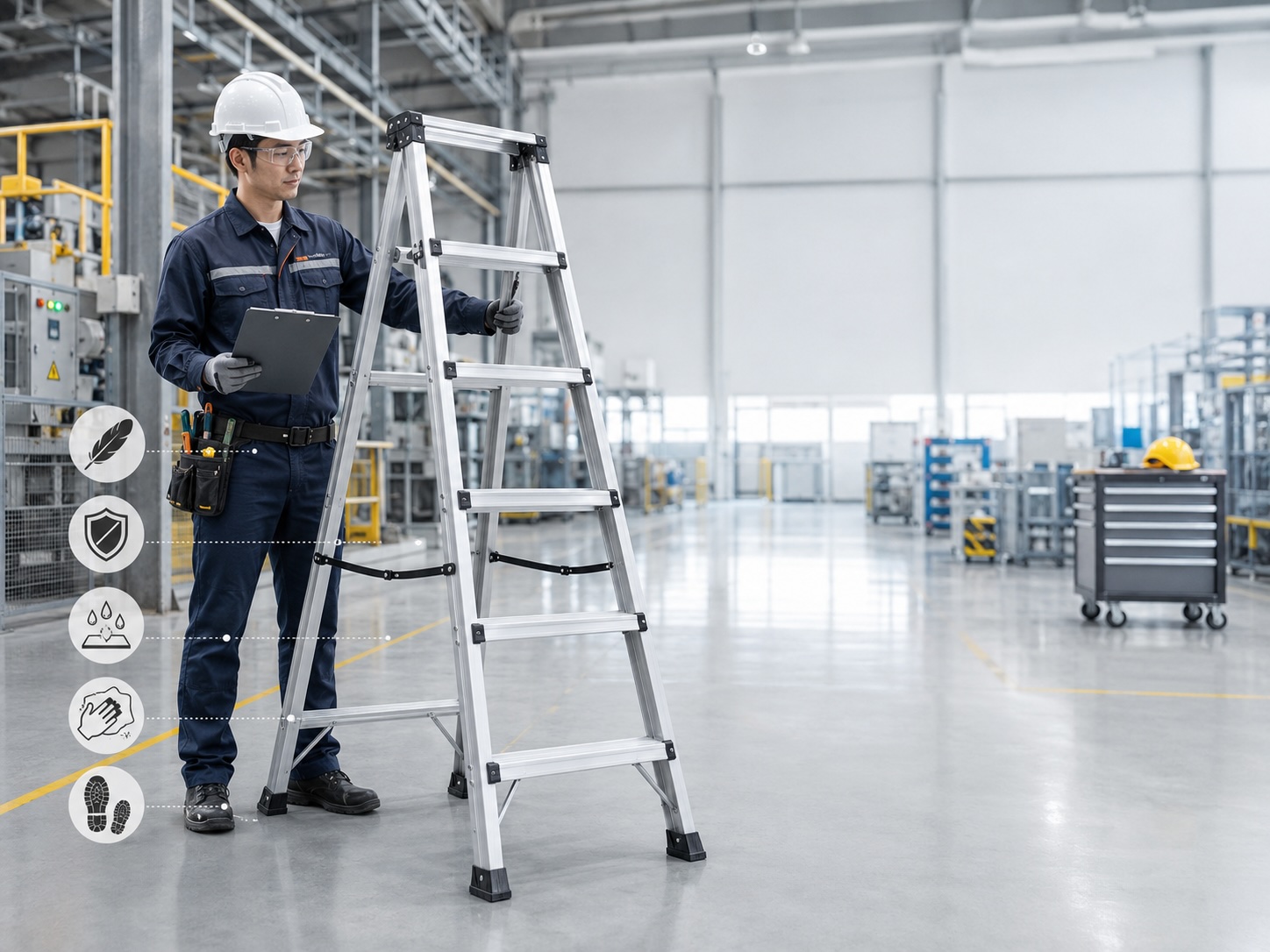
Stepladders come in materials such as aluminum, steel, wood, and FRP (fiber-reinforced plastic), but the most widely used—on job sites and in homes alike—is aluminum. Why are aluminum stepladders chosen so often? The reason is that three qualities—lightness, sturdiness, and ease of care—are balanced at a high level. This article organizes the reasons aluminum stepladders are chosen from these three perspectives, and also introduces how they differ from other materials and what to watch for when choosing.
Lightness: Easy to Carry and Set Up
Aluminum has roughly one-third the density of iron, so at the same size it comes out significantly lighter. Being light is not merely convenient—it ties directly to safety. When a ladder is easy to carry and set up, it becomes easier to avoid dangerous habits such as forcing work in an unstable spot out of reluctance to move it. The more a task involves frequent movement, the more aluminum’s lightness pays off.
Durability: Rust-Resistant and Long-Lasting
Because aluminum forms an oxide film on its surface, it does not decay from red rust the way iron does. It resists deterioration even outdoors, in humid environments, and on sites that handle water or chemicals, so it can be used reliably over a long period. Beyond being light, combined with structural design that secures strength, it achieves the toughness to withstand professional use.
Maintainability: Simple to Care For
Caring for an aluminum stepladder amounts to little more than wiping off dirt and inspecting the hinges, spreader, and steps for looseness or deformation. There is little need to worry about rot or splinters as with wood, and repainting is generally unnecessary. The small effort of daily inspection means, in turn, that it is “easier to keep inspecting—and therefore easier to keep safe.”
| Material | Weight | Durability | Care |
|---|---|---|---|
| Aluminum | Light | Rust-resistant | Simple, mainly wiping down |
| Steel | Heavy | Prone to rust | Requires anti-rust care |
| Wood | Heavy | Rots and cracks | Needs drying and splinter management |
| FRP (plastic) | Somewhat heavy | Highly insulating | Relatively simple |
Points to Watch When Choosing by Use
Well-balanced as aluminum is, it is not all-purpose. When working on electrical installations or near live parts, because aluminum conducts electricity, you must choose an insulating FRP model. Also, even among aluminum stepladders, the width of the top plate, the step width, the maximum rated load, and whether it has telescoping or variable legs should be selected according to the use. Rather than choosing on “lightness” alone, it is important to match the place and the work.
Conclusion
Aluminum stepladders are chosen because they satisfy—in good balance—qualities that are often hard to achieve together: lightness, durability, and maintainability. Light and easy to carry, strong against rust and long-lasting, and simple to care for—this overall strength is why they are supported so widely, from the home to the professional site. That said, do not forget to choose by use, such as needing an FRP model for electrical work. At Hasegawa Vietnam, we propose the optimal unit in material and specification to match your working environment.