
Introduction
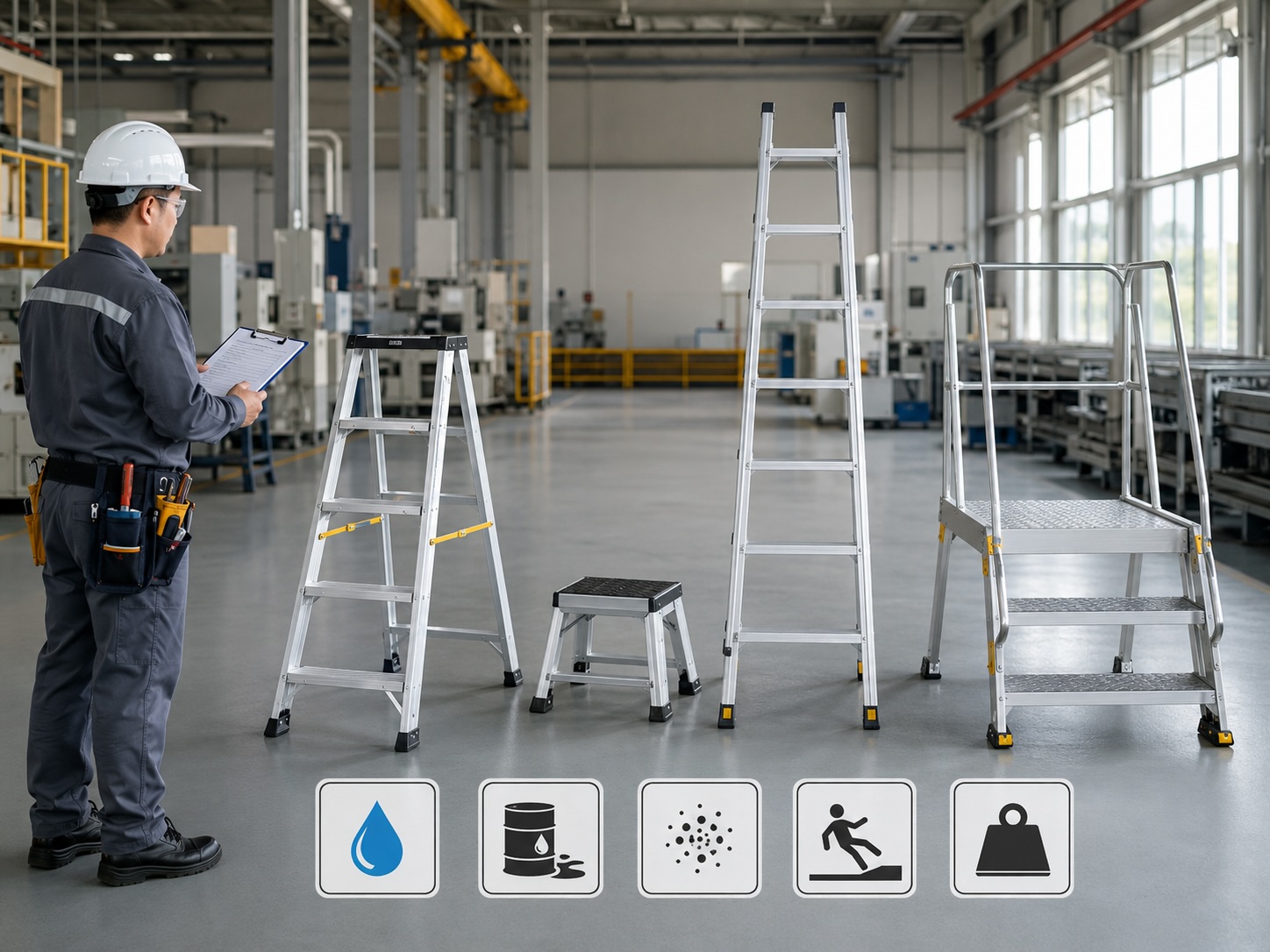
Stepladder vs Step Stool: Clear Differences and How to Choose the Right One is not only a product selection topic. It is a practical safety decision that affects fall prevention, work speed, tool handling, and daily maintenance. A ladder, stepladder, step stool, or work platform may look similar, but each assumes a different working height, standing time, floor condition, and load.
Key Conditions to Check First
Before choosing equipment, confirm where the worker will stand, how long the task will take, whether both hands are used, and whether tools or materials are carried. A flat dry floor may allow a standard stepladder, while oil, dust, water, uneven ground, or electrical risk may require a different product.
- Measure the actual hand working height.
- Separate short tasks from tasks over 30 minutes.
- Add worker, tool, and material weight.
- Check rubber feet, hinges, spreaders, and steps before use.
- Confirm storage space and movement route.
Common Selection Mistakes
The most common mistake is choosing only by reachable height. In real work, side reach, twisting posture, tool weight, and floor stability matter. If the worker must stand on the top plate, lean sideways, or move the ladder repeatedly in a narrow aisle, the equipment choice should be reviewed.
| Check point | Practical guide |
|---|---|
| Short task | 5 to 15 minutes |
| Long task | Consider a work platform over 30 minutes |
| Pre-use inspection | Feet, steps, hinges, spreaders |
| Load | Worker plus tools and materials |
| Floor | Oil, water, dust, slope, level difference |
How Hasegawa Vietnam Can Help
Hasegawa Vietnam can support product selection by reviewing site photos, working height, floor condition, storage space, frequency of use, and maintenance rules. Combining the right product with inspection routines and operator training reduces risk more effectively than relying on equipment alone.
Conclusion
Stepladder vs Step Stool: Clear Differences and How to Choose the Right One should be decided from actual site conditions. When height, floor condition, work duration, load, and movement route are checked in advance, the selected ladder or platform is safer, easier to maintain, and more suitable for repeated industrial use.