
Introduction
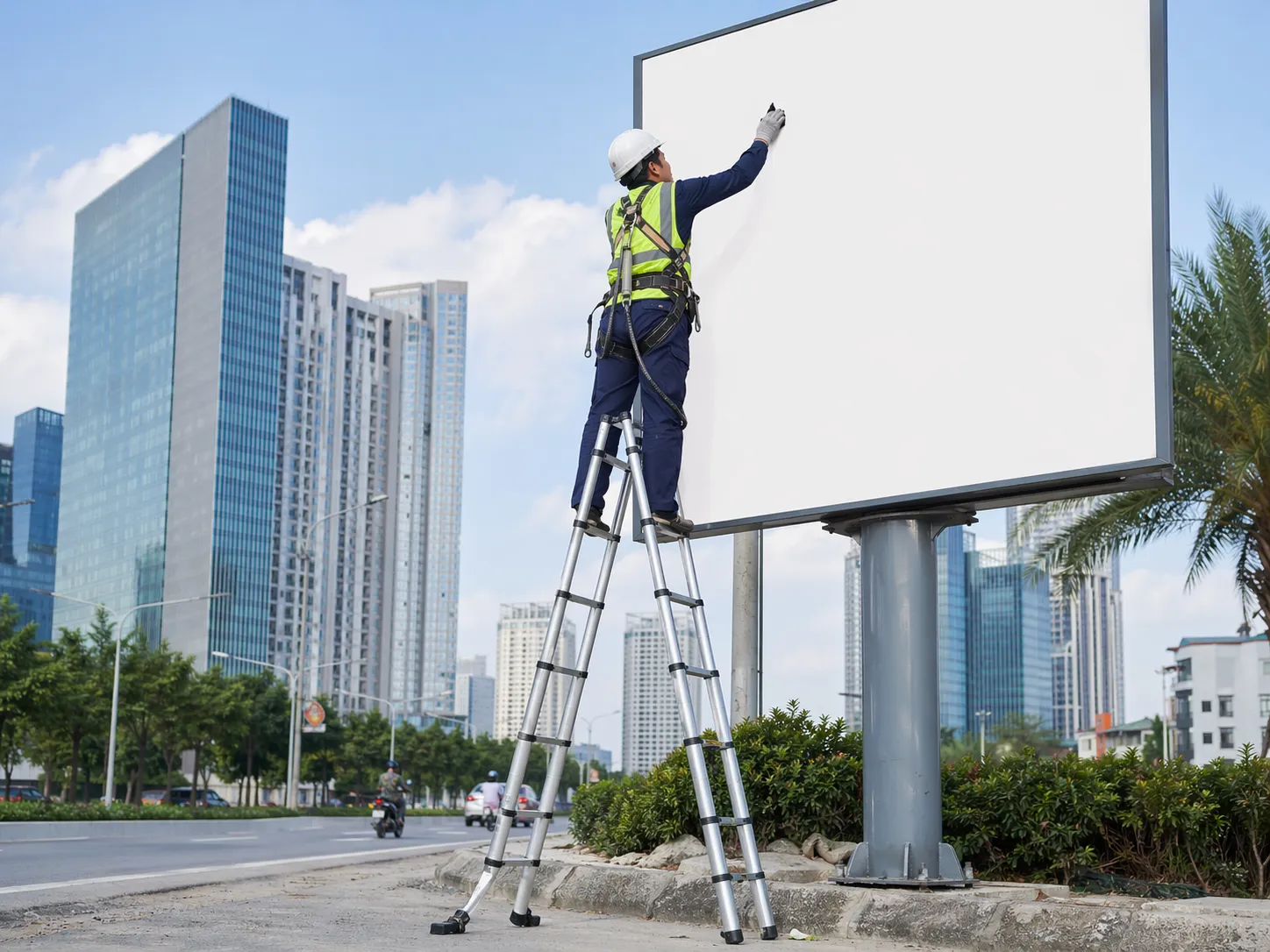
In urban areas of Vietnam, colorful LED billboards and large advertising towers have become symbols of the city. However, behind this glamor, ensuring the safety of workers engaged in the installation and maintenance of these signs is now an unavoidable management issue. According to a report by the Vietnam Ministry of Labour, Invalids and Social Affairs (MOLISA), approximately 40% of occupational accidents in the construction and maintenance industry are caused by “falls from heights.”
In this article, we will explain to site supervisors and safety managers involved in signage construction the risk factors in Vietnam’s unique work environment using numerical data. We will also discuss the importance of selecting high-quality equipment that complies with Japan’s JIS standards and Vietnam’s TCVN standards. Let’s look at the specific steps of how investing in safety can enhance on-site productivity and corporate reliability.
Challenges and Background
Market Data: Current Status of Occupational Accidents and High-Altitude Work in Vietnam
With Vietnam’s rapid economic growth, the outdoor advertising market continues to grow at an annual rate of over 10%. Accordingly, the frequency of sign maintenance is increasing; however, traditional bamboo ladders and cheap aluminum ladders of uncertain strength are still frequently seen on-site.
MOLISA statistics (released in FY2023) show that construction and building maintenance work accounts for 37.5% of fatal occupational accidents nationwide, the highest among all industries. Particularly in “short-term and irregular” high-altitude work such as signage tasks, there are many cases where scaffold installation is skipped or unstable stepladders are used forcedly, which triggers serious accidents.
Risk Presentation: The “Triple Affliction” Unique to Signage Work
Signage maintenance involves three specific risks not found in other high-altitude tasks.
- Unstable Grounding: Sidewalks and areas around buildings in Vietnam often have many tiled steps, making it difficult to maintain a level surface.
- Electric Shock Risk: Wiring for LED signs and lighting fixtures is often exposed, and using highly conductive, cheap aluminum materials can lead to secondary disasters.
- Work Space Constraints: In the narrow spaces of busy downtown areas, large aerial work platforms cannot enter, making compact and highly stable elevating equipment essential.
Why Hasegawa’s “Professional Equipment” is Chosen
Features: Advanced Balance of Safety and Work Efficiency
The equipment provided by Hasegawa Vietnam is not just a “ladder.” It is a “safety device” designed to endure harsh on-site environments.
- Adoption of High-Strength Aluminum Alloy (A6063, etc.): Using materials also utilized in aircraft, we ensure a load capacity of 100kg to 150kg. This minimizes deflection and eliminates the psychological anxiety of workers.
- Leg Extension Function: Models equipped with legs (adjusters) capable of up to 31cm height adjustment can instantly secure a level surface even on Vietnam’s uneven ground. Since all four legs can be adjusted independently, work on stairs is also possible.
- Insulation Performance (FRP Models): For signage work involving electrical tasks, we offer stepladders made of fiberglass (FRP) with a withstand voltage of 20,000V or more. This physically blocks electric shock accidents.
Case Study: Advertising Construction Company A in Hanoi
Before: Used cheap telescopic ladders. Setup took a long time, and workers complained that they “couldn’t concentrate on work because they were afraid of shaking.” Additionally, falls (minor injuries) due to stepladder breakage occurred about twice a year.
Action: Introduced 15 units of Hasegawa’s “Specialized Stepladders (with wide steps and telescopic legs).” Simultaneously, safety training on correct installation methods was conducted by local staff.
After: Zero fall accidents have been maintained for one year after introduction. With increased stability, maintenance time per sign was reduced by approximately 20%. The turnover rate of workers also decreased, and the company’s “high safety awareness” directly led to increased trust from clients.
Hasegawa’s Reliability
- Factors of Fall Accidents: Equipment damage and unstable installation account for 32% (Source: MOLISA 2023)
- JIS S1121 (Ladders and Stepladders): Requires a breaking strength of at least 2.5 times the maximum load in strength tests.
- TCVN 12262-1: Safety requirements for portable ladders in Vietnamese National Standards.
- Electrical Insulation Test: FRP stepladders clear a withstand voltage of AC20kV for 1 minute (Source: In-house quality standards).
- Improvement in Work Efficiency: Setup time reduced by an average of 45% due to the telescopic leg function (Source: On-site verification data).
Sources: Vietnam Ministry of Labour, Invalids and Social Affairs (MOLISA) / Japanese Industrial Standards Committee
Quality Control and Certification
Hasegawa’s products are based on Japan’s JIS standards and also comply with Vietnam’s TCVN standards. In the manufacturing process, strict quality inspections are conducted, ranging from rivet joint strength to anti-corrosion treatment of the surface. A key feature is that the strength is unlikely to decrease over the long term, even in Vietnam’s hot and humid environment.
Customization and Support System
Field needs are not all the same. In response to requests such as “I want a scaffold 10cm higher” or “I need a special shape to get behind a sign,” Hasegawa Vietnam also handles the design and construction of made-to-order scaffolds (custom products). Furthermore, we don’t just sell the product and end there; we strengthen our after-sales support by lecturing local safety managers on “correct inspection and disposal criteria.”
Summary
Safety management in signage installation and maintenance is not just about protecting the lives of employees, but is an important investment to protect a company’s assets and brand. As construction sites in Vietnam modernize, choosing equipment based solely on low cost carries the significant risk of future accident costs.
Hasegawa Vietnam will continue to provide the most trusted safety solutions by merging Japanese technology, backed by over 100 years of history, with local Vietnamese needs. If you ever feel uneasy about safety on-site, please try picking up our equipment.