
Introduction
The safety of elevating equipment such as stepladders and ladders depends heavily on “the choice of material,” even more so than on design and structure. In fact, for products of the same shape and height, there are significant differences in load capacity, durability, and insulation properties between those made of aluminum, wood, and FRP (fiber-reinforced plastic). Using the wrong material for the job can often lead to serious accidents.
This article is for professionals in manufacturing, construction, electrical work, and interior design who use these tools daily. We will explain the differences and proper selection of stepladders and ladders based on their material. Specifically, we will provide a detailed comparison of the performance, suitability, and points of caution for three materials—aluminum, wood, and FRP—based on domestic and international safety standards and real-world deployment cases.
We will provide useful tips for material selection that not only improve work efficiency but also ensure worker safety and contribute to long-term cost reduction, supported by a wealth of practical examples and primary data.
Challenges and Context
Market Data
In recent years, aluminum ladders and stepladders have remained dominant in the Vietnamese elevated work market, accounting for approximately 70% of the total. This is due to their lightweight and cost-effective nature. On the other hand, the adoption of FRP (fiber-reinforced plastic) ladders is increasing year by year, driven by safety demands in electrical and chemical plants, leading to a steady expansion of their market share.
Furthermore, according to the latest statistics from the Department of Labor Safety and Hygiene, about 34% of accidents involving stepladders and ladders are attributed to “incorrect material selection” or “unsuitable use.” This highlights the current situation where choosing the wrong material directly leads to serious risks like electric shock, breakage, and falls.
Risk Warnings
Despite the distinct characteristics of each material, they are often used without sufficient knowledge or understanding, leading to the following reported risks:
- Aluminum Stepladders: While lightweight and easy to handle, they are metallic and thus conductive, causing electric shock accidents in electrical work environments. Insulation measures are mandatory when working near high-voltage equipment.
- Wooden Stepladders: A natural material that is non-slip and popular, but it is prone to deterioration and rot from moisture absorption, and joints can loosen, causing breakage and falls. Regular inspections and environmental management are crucial.
- FRP Stepladders: While excellent in insulation and corrosion resistance, they are weak against excessive loads or strong impacts, risking material-specific failures like cracking or delamination. Furthermore, it is difficult to visually assess their deterioration, so diligent operational management is essential.
Product and Service Introduction
Features
Each material used for stepladders and ladders has its own unique characteristics, and it is vital to select the appropriate material based on the job site conditions and work content.
- Aluminum: This is a versatile, all-purpose material that is lightweight, rust-resistant, and highly cost-effective. Its high malleability allows for a wide range of multifunctional products, such as foldable and telescopic models. It is also easily recyclable after use, contributing to environmental sustainability. However, due to its conductivity, caution is required when using it in electrical work environments.
- Wood: Its warm, natural feel and non-slip quality make it an ideal choice for indoor finishing work, traditional building restoration, and cultural heritage preservation. Its relatively soft texture also has the advantage of not damaging flooring. On the other hand, it is vulnerable to moisture and insect damage, making it unsuitable for outdoor or long-term use.
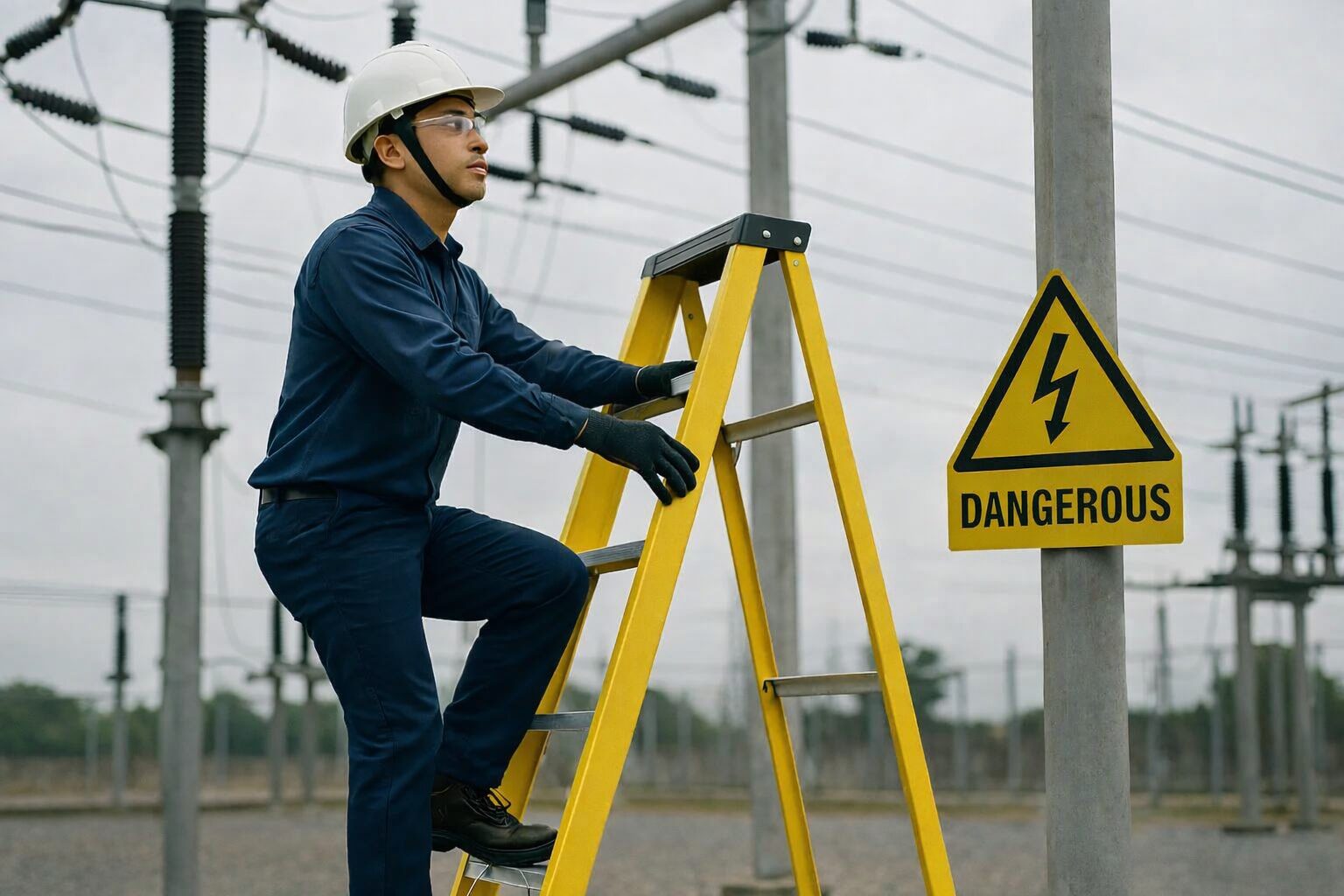
- FRP: A composite material made of fiberglass and resin, its most notable feature is its high insulation, which does not conduct electricity. This makes it an essential material for sites with electric shock risks, such as electrical construction, railway facilities, and power plants. It also boasts excellent chemical and weather resistance. Although it is slightly heavier and more expensive than metal, it is chosen for its superior safety and durability.
Case Studies
- [Before] Electric Shock Risk with Metal Ladder
- At a construction site for Company A, an aluminum ladder was used during high-voltage cable installation, resulting in an electric shock accident from accidental contact with a power source.
- [Action] FRP ladders were deployed, switching to site specifications that prioritize insulation.
- [After] The risk of electric shock was eliminated, reducing the mental burden on the site manager. Furthermore, work efficiency improved by 20% due to reduced worker travel time.
- [Before] Damage from Deterioration of a Wooden Stepladder
- At an interior renovation site for Company B, a wooden stepladder deteriorated from moisture absorption, and a rung broke during a task.
- [Action] It was replaced with a lightweight aluminum stepladder, combining stability and portability.
- [After] A single worker could carry it, reducing the transport burden by about 50%. The speed of movement between sites also improved.
Hasegawa’s Reliability
Quality Management and Certifications
Hasegawa Kogyo prioritizes “safety” and “reliability,” implementing a strict quality control system for all its products. The products comply with various certifications, including the Japanese Industrial Standards (JIS), Product Safety Association SG Mark, and European EN standards. By meeting different criteria for each material and application, we ensure a high level of safety.
Specifically, our FRP stepladders have passed the insulation performance test of ISO 14122-3 (Permanent means of access to machinery) and have also passed electrical conductivity tests. Furthermore, all materials used are only those that have cleared our in-house strength and durability standards. This ensures consistent quality regardless of the usage environment or application.
Customization and Support System
To meet diverse site needs, Hasegawa offers a comprehensive system from material selection and design to manufacturing and post-deployment inspection support. For example, for narrow or uneven sites, we propose FRP stepladders with freely customizable leg lengths and top plate widths. For indoor work, we flexibly accommodate requests for specific paint colors or size changes for wooden stepladders to match the interior decor.
Additionally, before deployment, we conduct free site assessments and environmental diagnoses to assist in selecting the appropriate material and structure. Even after delivery, we provide peace of mind throughout the product’s life by offering regular notifications for annual inspections and part replacements, as well as providing usage training.
Summary
Ladders and stepladders may seem “all alike,” but the choice of material can make a big difference in safety, durability, and work efficiency. Aluminum is lightweight and cost-effective, wood is suitable for indoor or traditional tasks, and FRP is an indispensable material for sites with electric shock risks.
In this article, we have organized the characteristics of each material and how to use them correctly, while also providing tips to reduce risks and improve work based on real-world examples. Identifying “which material is most suitable for the job site” at the product consideration stage leads to long-term cost reduction and safety assurance.
Hasegawa will support you from material selection based on feedback from your site. Custom products and free diagnostic services are also available. Please contact us via the link below.
Contact us for custom stepladder consultation here
Related Links