
Introduction
In manufacturing plants and construction sites across Vietnam, step ladders (“Thang nhôm”) that ensure safety during work at height are indispensable tools. However, did you know that the maintenance condition of a step ladder is a critical factor directly related to the safety and lives of workers—not only at industrial worksites but also during light tasks in homes and offices?
Never underestimate what may seem like “just dirt.” Mud, paint, and chemical residues attached to a step ladder can accelerate corrosion of the aluminum alloy material and may also hide structural defects such as cracks. At Hasegawa, we have been pursuing the quality and safety of ladders and step ladders for more than 60 years since our founding in Japan. From this experience, one fact stands out clearly: cleaning is the most effective form of safety inspection.
In this article, we apply maintenance standards used by professional safety managers to household step ladders. Based on primary data and chemical principles, we explain the correct ways to remove dirt, effective techniques for paint removal, and proper lubrication methods to extend the product’s lifespan. Please use this guide to help keep your company’s and your household’s step ladders safe, especially in Vietnam’s hot and humid climate.
Why “Cleaning” Determines Lifespan and Safety
Characteristics of Aluminum Alloy and the Risk of “Invisible Corrosion”
Aluminum alloy, the primary material used in step ladders, is lightweight and highly rigid, but it is also a metal that can be sensitive to chemical influences. Normally, the surface of aluminum is treated with anodizing (anodic oxide coating), which provides corrosion resistance and wear resistance. Standards such as JIS (Japanese Industrial Standards) and Vietnam’s TCVN regulations strictly specify the quality of this protective coating.
However, the following substances—commonly encountered in homes and worksites—can potentially damage this protective layer.
- Alkaline detergents and contaminants: baking soda, sodium sesquicarbonate cleaners, mold removers, cement (mortar), etc.
- Acidic detergents: toilet cleaners, acid rain, etc.
- Contact with dissimilar metals: iron particles attaching to the surface can cause “galvanic corrosion” when moisture is present.
Particular caution is required with alkaline substances. Aluminum is an amphoteric metal, meaning it reacts with both acids and alkalis. In strong alkaline environments with a pH above 10, corrosion reactions can progress rapidly, generating hydrogen while gradually thinning the material.
“Structural Cracks” Hidden by Dirt
Another physical risk is that paint or mud covering areas around rivets or pillar joints can delay the detection of fine cracks (hairline cracks) caused by metal fatigue. Failing to perform regular cleaning is essentially equivalent to continuing to drive a car with failing brakes.
Practice! Professional-Level Cleaning & Maintenance
Here, we explain the specific steps recommended by Hasegawa Vietnam to remove dirt effectively without damaging the material.
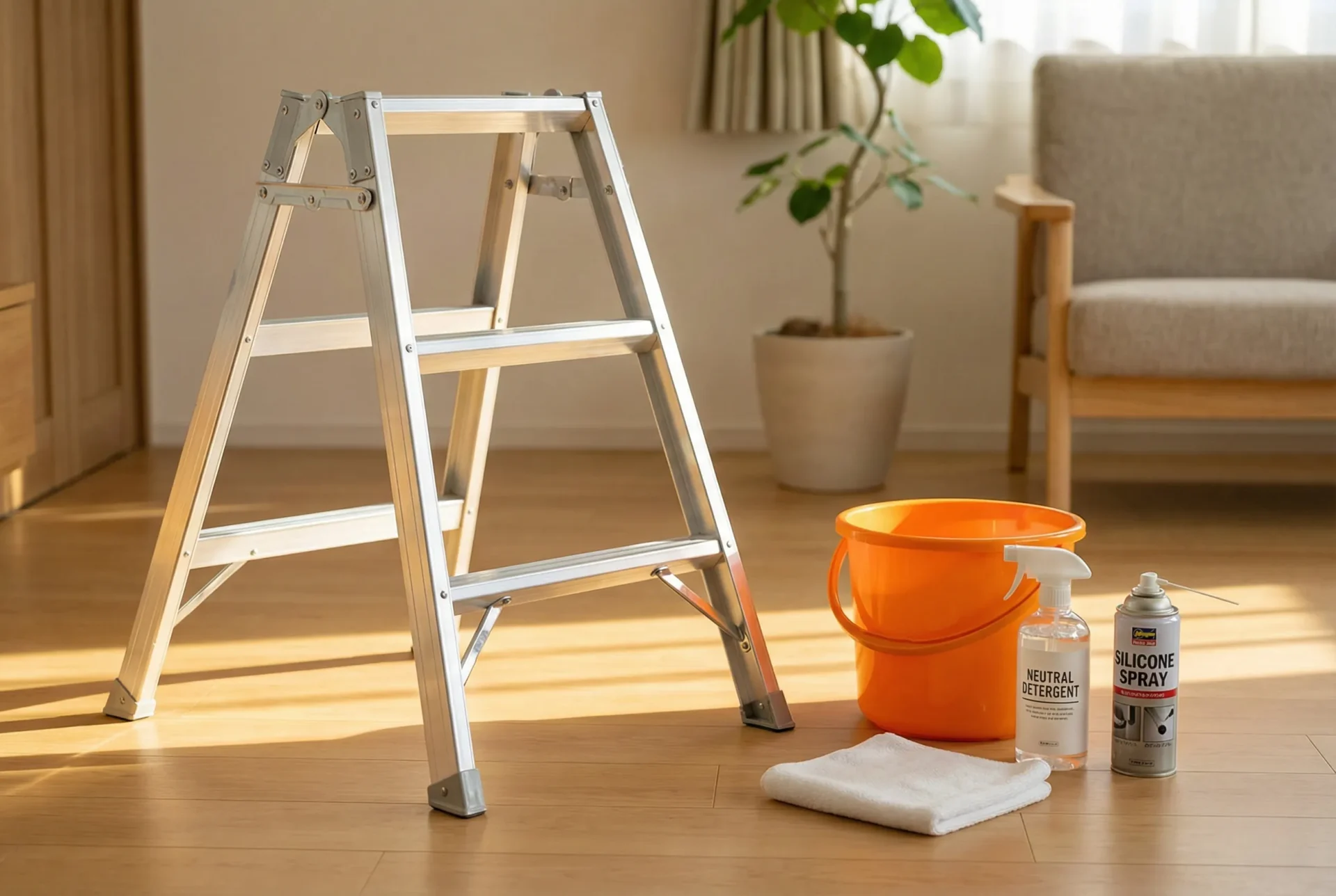
Items to Prepare (Recommended Tools)
- Neutral detergent: pH 6.0–8.0 (such as dishwashing liquid). *Acidic or alkaline cleaners must not be used.*
- Soft cloth or sponge: One that does not contain abrasives (such as nylon non-woven scrubbers).
- Toothbrush: For removing mud from rivets and narrow gaps.
- Plastic scraper: For removing hardened paint or gum.
- Silicone spray: For lubricating moving parts (solvent-free type recommended).
- Bucket and water: For thorough rinsing.
STEP 1: Remove Mud and Dust, Then Rinse with Water
First, rinse off surface dust and mud with water. In dusty environments such as Vietnam’s dry season, wiping immediately with a cloth can cause sand particles to act as abrasives, which may damage the anodized protective layer.
Areas such as the joints between the pillars and steps, as well as the underside of the top platform, are places where mud-dauber nests or spider webs can easily form. Use a toothbrush to carefully remove them.
STEP 2: Cleaning Oil Stains and Hand Marks
Dilute the neutral detergent with water (about 1–3% concentration), apply it to a sponge, and gently wipe the surface.
In particular, the pillar areas frequently touched by hands when climbing up and down tend to accumulate skin oils that oxidize and cause black stains. Keeping these areas clean helps maintain proper grip during work and prevents slipping accidents.
[Note] Regarding the use of melamine sponges
Melamine sponges have strong abrasive properties. When used on matte-finished products or colored anodized aluminum products, they may cause discoloration or uneven fading. If you intend to use one, first test it on an inconspicuous area.
STEP 3: Removing Paint and Coating Stains
Step ladders used for DIY projects or painting work often end up with paint stains.
- For water-based paint: If it has not yet hardened, wiping with water is usually sufficient.
- For oil-based paint or hardened paint:
- Apply a small amount of thinner or alcohol (ethanol) to a cloth and wipe it off by “gently dabbing”.
- Strictly prohibited: Pouring thinner directly onto the ladder. If it contacts plastic parts (such as anti-slip end caps), chemical reactions may cause cracking (chemical cracks), which can lead to serious accidents such as ladder collapse.
- For thick, hardened paint, scrape it off using a plastic scraper instead of a metal cutter to avoid damaging the aluminum base material.
STEP 4: Complete Drying and Corrosion Prevention
After cleaning, wipe off moisture with a dry cloth and allow the ladder to dry completely in a well-ventilated shaded area.
Considering Vietnam’s average humidity (around 80% or higher), residual moisture can directly lead to the formation of white corrosion (aluminum hydroxide). In particular, carefully remove water trapped in gaps of telescopic ladders or folding sections.
Case Study: Restoring a Step Ladder Used for 5 Years (Before → Action → After)
Here is an example from a local interior contractor in Ho Chi Minh City, a customer of Hasegawa Vietnam.
Before: Problems Caused by Lack of Maintenance
- Years of use: 5 years
- Condition: Putty and paint adhered across the entire pillar surface. The opening and closing hardware became stiff and produced a squeaking noise. Hardened mortar stuck to the anti-slip end caps (rubber feet), significantly reducing ground grip.
- Risk: High risk of the ladder failing to open properly or slipping during work.
Action: Proper Treatment
- Cleaning: Removed overall dirt using neutral detergent and pressure washing (low-pressure setting).
- Foreign object removal: Removed small stones and mortar stuck in the bottom of the end caps using a pick.
- Lubrication: Removed old grease and dirt from moving parts (hinges and locking hardware) using a parts cleaner, then applied new silicone spray.
- Part replacement: Replaced worn end caps with new ones (genuine parts).
After: Restored to Like-New Operation
- Result: Opening and closing became so smooth that it could be operated with just one finger. The squeaking noise disappeared.
- Effect: Setup time at worksites was reduced, and worker stress decreased. More importantly, the mindset of “taking care of tools” spread throughout the team.
Hasegawa Reliability: Quality Design That Supports Maintenance
With proper maintenance, Hasegawa step ladders can be used safely for a long time. This durability is supported by our design philosophy and manufacturing quality.
1. Surface Treatment That Meets JIS/SG Standards
Compliant with Japanese Industrial Standards (JIS S 1121) and the Product Safety Association (SG mark) standards, our ladders feature anodized coatings with appropriate thickness. This ensures excellent corrosion resistance even in Vietnam’s hot and humid environment. Compared with low-cost non-branded products, there is a significant difference in long-term corrosion progression.
2. Supply System for Repair Parts
If issues remain after cleaning—such as worn end caps or deformed hardware—Hasegawa provides replacement parts for key consumable components (anti-slip end caps, locking hardware, etc.).
Manufacturing products designed to be “used for a long time” rather than “disposable” is a wise choice from both an SDGs (Sustainable Development Goals) perspective and a cost-performance standpoint.
3. Use of “Red” to Visualize Safety
Some professional models adopt warning colors such as red for certain parts, allowing users to visually recognize hazardous areas or lock status. Cleaning the ladder restores visibility of these safety indicators, helping prevent operational mistakes.
Conclusion
Whether for household or professional use, the fundamental principles of step ladder maintenance remain the same.
- Do not use acidic or alkaline cleaners (use only neutral detergents).
- Do not allow thinner to contact plastic parts.
- While cleaning, also inspect for cracks or deformation.
- Regularly lubricate moving parts with silicone spray.
A “dirty ladder” not only lowers the professional image of a worksite but also reduces workers’ safety awareness.
Why not spend 15 minutes this weekend polishing your favorite ladder? Its renewed shine will promise safety and efficiency for your next task.
If you have any questions about product maintenance or parts replacement, please feel free to contact Hasegawa Vietnam. We are committed to supporting a safe working environment for work at height.