
Introduction
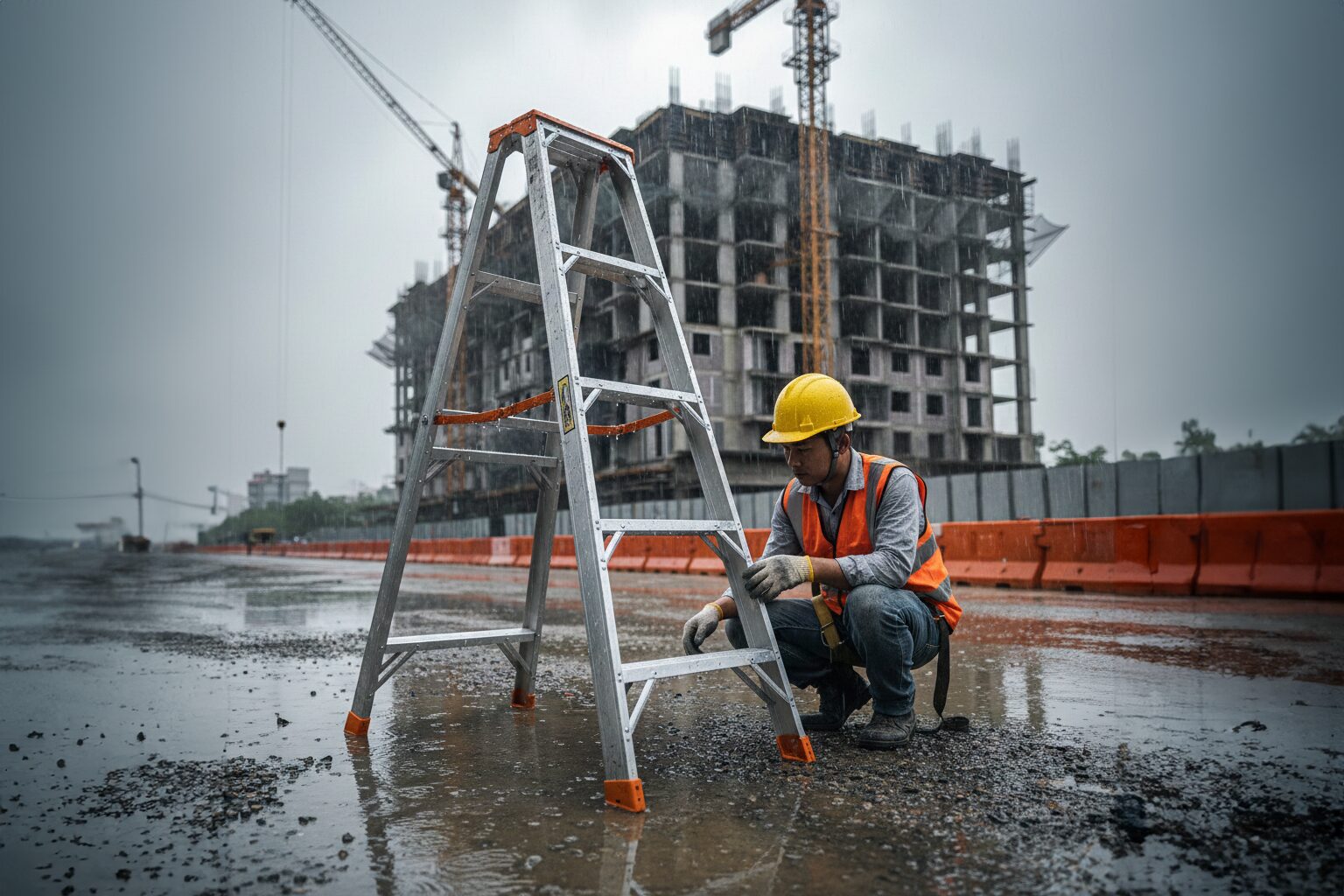
The Rainy Season in Vietnam is the harshest time of the year for construction and manufacturing sites. In the south, from May to November, more than 1,500mm to 2,000mm of rain falls, accounting for the majority of the annual precipitation. Immediately after intense rain like squalls, the risk regarding footing increases drastically at sites due to damp concrete, muddy soil, and wet equipment.
Overconfidence thinking “It’s only a little wet, so it’s fine” invites irreversible occupational accidents. In fact, many occupational accidents occur due to a lack of countermeasures against these environmental changes. Based on the safety expertise held by Hasegawa Vietnam, this article visualizes the risks specific to the rainy season using quantitative data, and explains specific measures that site managers can implement immediately, as well as points for selecting Japanese-quality equipment.
The “Invisible” Risks Lurking in Sites During the Rainy Season
The Reality Shown by Labor Accident Data
The current situation regarding occupational accidents in Vietnam is serious. According to data from the Ministry of Labour, Invalids and Social Affairs (MoLISA), 8,286 occupational accidents occurred nationwide in 2024, and 727 precious lives were lost. Among these, the construction industry is classified as a “high-risk industry” with the highest number of fatal accidents alongside mining, and one of the main causes is “falls from heights.”
At sites during the rainy season, physical “slipperiness” amplifies this risk. While the coefficient of friction for rubber on dry concrete is approximately 0.6 to 0.85, there is data showing it drops to 0.45 to 0.75 when wet. In other words, ladder work after rain is conducted with approximately 20% to 30% less grip force than usual.
3 Fatal Risk Factors
There are mainly three risks lurking in outdoor work during the rainy season.
- Slips: Accidents where the ladder topples over while climbing occur frequently because friction decreases at the contact point between the ladder feet (end caps) and the ground, as well as between the worker’s shoe soles and the steps (rungs).
- Ground Loosening: On unpaved sites, soil containing rainwater softens. This leads to cases where only one leg of a stepladder sinks, causing a loss of balance and resulting in a fall.
- Corrosion (Rust): In Vietnam’s environment where humidity exceeds 80%, cheap iron stepladders rust rapidly. Corrosion progresses in invisible areas, and there is a fear that they may suddenly break due to an inability to withstand the load one day.
Why is “Hasegawa” Chosen for Sites After Rain?
Unique Anti-Slip Technology and Materials
Aluminum ladders and stepladders manufactured by Hasegawa Vietnam conform to Japanese JIS standards (JIS S 1121) and international standards, clearing strict anti-slip standards (coefficient of friction of 0.4 or higher).
- Highly Corrosion-Resistant Aluminum Alloy: While being about 1/3 the weight of iron, the surface undergoes anodizing treatment, making it resistant to rust even in Vietnam’s hot and humid rainy season and maintaining strength for a long time.
- Specialized End Caps (Rubber Feet): Hasegawa stepladders adopt high-quality “anti-slip end caps” designed with grooves that secure contact area and drain water even on wet ground.
- Step Processing: Wave-shaped uneven processing is applied to the rungs (steps), demonstrating reliable grip even if work shoes are wet.
Case Study: Construction Site in Da Nang (Before → Action → After)
Here is a case study from a construction project near Da Nang city, where Hasegawa Vietnam’s factory is located.
- Before: Previously, they used cheap iron stepladders purchased at local markets. However, when the rainy season began, the hinges seized up due to rust, and they broke when forced open. Furthermore, “near-miss” incidents where stepladders slipped during interior work on wet tile floors occurred frequently.
- Action: The safety manager took the risks seriously and introduced Hasegawa Vietnam’s “JIS Standard Compliant Aluminum Stepladders” in bulk. They particularly evaluated the performance of the anti-slip end caps and the durability backed by 100,000 cycle opening/closing tests.
- After: In the rainy season following the introduction, falling accidents caused by stepladders dropped to zero. Workers voiced that “it doesn’t wobble even on wet scaffolding, so we can step on it with peace of mind (Reliability you can feel when you step on),” and work efficiency improved by approximately 15%.
Operational Rules to Maximize Safety (Recommended by Hasegawa Kogyo)
Even excellent tools cannot function if they are not used correctly. Please thoroughly enforce the following rules during the rainy season.
Correct Installation and Inspection (75-Degree Rule and 3-Point Contact)
- 75-Degree Installation Angle: When using a ladder, please install it at an angle of approximately 75 degrees against the wall. This prevents sliding out and is the angle most resistant to loads (4-to-1 rule: ratio of 4 height to 1 base).
- Strict Adherence to 3-Point Contact: When climbing up or down, always support your body with 3 points: “two hands and one foot” or “one hand and two feet” to prevent slips with wet gloves or shoes.
- Ground Curing: When using on muddy ground, lay a wide board to expand the contact area like an outrigger to prevent sinking.
Maintenance and Storage
- Cleaning Mud Dirt: Mud stuck in moving parts or step grooves causes slipping. Wash with water after use, and be sure to periodically oil moving parts (rivets and hinges) in particular. Although aluminum is rust-resistant, trapped debris causes malfunctions.
- Inspection: Always check if the end caps (rubber feet) are worn or deformed before starting work. Worn rubber slides like on ice on wet road surfaces.
Summary
In Vietnam during the rainy season, the safety of ladders and stepladders is determined not by “luck” but by “preparation.” As statistical data shows, falls from heights are the greatest threat at construction sites, but they can be prevented with appropriate equipment and operations.
Hasegawa Vietnam manufactures products in Da Nang, Vietnam, that observe Japanese safety standards (JIS) and quality control processes. Hasegawa products, which are resistant to rust and hard to slip, are an investment to protect the lives of professionals working in this country with heavy rainfall.
Why not review the footing of your site before the next rain falls? For consultation on building a safe work environment or for custom-made products tailored to your site, please feel free to contact us at the window below.